
Con Ed in East Harlem
New York City, March 12, 2014
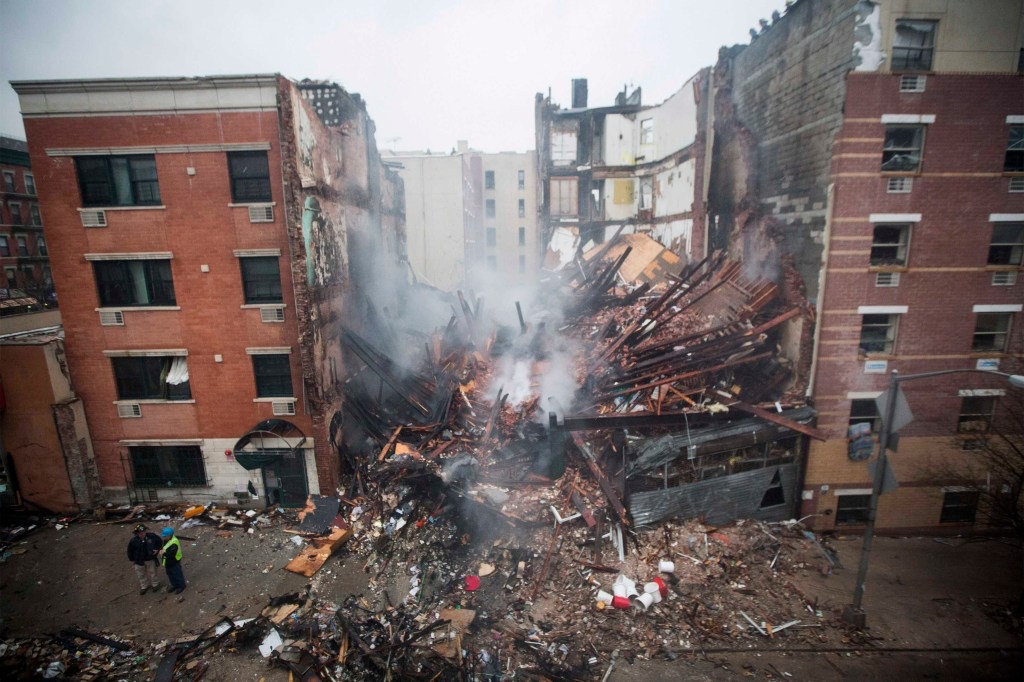
Overview:
On March 12, 2014, at approximately 9:30 a.m. EDT, two adjacent five-story buildings located on Park Avenue between East 116th and East 117th Streets in East Harlem, Manhattan, were destroyed by a natural gas-fueled explosion and subsequent fire. The incident resulted in eight fatalities, over 50 injuries, and the displacement of more than 100 families. The explosion also disrupted Metro-North Railroad service due to debris on the tracks.
Key Findings (non-exhaustive – see NTSB Report attached):
The probable cause of the explosion was natural gas leaking from a cracked service tee fusion joint that migrated into the adjacent buildings and was ignited.
Post-incident testing revealed improper preparation of the pipe surfaces that were fused during the 2011 service installation.
Investigation revealed that a large hole in the sewer main in the area of the gas main and service line caused soil supporting the gas main and service tee to erode, leading to its failure and subsequent leakage. The sewer line breach was initially reported to the responsible city agency in 2006, but it had not been repaired prior to the explosion. Numerous reports and temporary repairs of a sinkhole in the vicinity of the incident occurred in the years leading up to the incident.
Although multiple people interviewed after the incident reported smelling gas odors the evening before, Con Edison did not receive any reports of the odor until 25 minutes prior to the explosion.
Lessons Learned (non-exhaustive):
Importance of early detection and reporting of gas odors: Although multiple people reported smelling gas the day before the incident, no calls were placed to Con Edison until 25 minutes before the explosion. This illustrates the need for ongoing review and improvements to public awareness programs regarding the critical importance of promptly notifying the gas utility or 911 of gas odors. Of particular note is the challenge of multi-use and/or large residential buildings, where assumptions that others will make, the call may lead to no call.
Quality Control and Quality Assurance for Plastic Fusion: Post-incident testing revealed that the pipe surface preparation prior to the 2011 service tee fusion was inadequate. This, coupled with the stress created by the sewer breach and sinkhole, combined to cause the failure of the fusion joint and subsequent leak. This highlights the need to ensure that the operators’ procedures align with manufacturers’ recommendation, and that those procedures are followed by trained and competent personnel with appropriate levels of inspection and oversight.
Interagency Coordination/Risk Mitigation: Although the sewer breach and subsequent soil erosion had been reported to the sewer authority, only temporary repairs to the sinkhole occurred in the years prior to the incident. This ongoing change in sewer and road conditions, which could place gas infrastructure at risk, was not communicated and therefore not mitigated. This highlights the need for improved coordination and communication between utility companies and city agencies in response to infrastructure issues.
Key Considerations (non-exhaustive) :
Review the effectiveness of Public Awareness Programs in prompting immediate notification to the gas utility and 911 for any suspected gas odor. Particular emphasis on multi-use and large residential buildings/apartments may be warranted to emphasize that everyone and anyone should make the call and not assume someone else will.
Consider advocating for or otherwise supporting the use of residential methane detectors.
Review procedures related to plastic fusion to ensure procedure adequacy as well as continued focus on competency-based training of all personnel.
Review the adequacy of quality control and quality assurance processes for high-risk activities, including plastic pipe joining.
Review and develop processes for ongoing coordination and communication of interagency risks, such as sewer or water-related infrastructure hazards, as well as procedures to monitor/mitigate risks revealed.
Review leak survey, damage prevention patrol, or other processes that the gas utility could use to locate, report, and coordinate response to sinkholes or other infrastructure hazards that may impact gas infrastructure.
Review NTSB’s Investigation here: https://www.ntsb.gov/investigations/Pages/DCA14MP002.aspx
NGA publishes Industry Remembrance Events in the spirit of continuous improvement. Findings and conclusions are extracted from publicly available reports and may not reflect those of all stakeholders.