
Washington Gas Light Company (WGL) in Silver Spring
Maryland, August 10, 2016
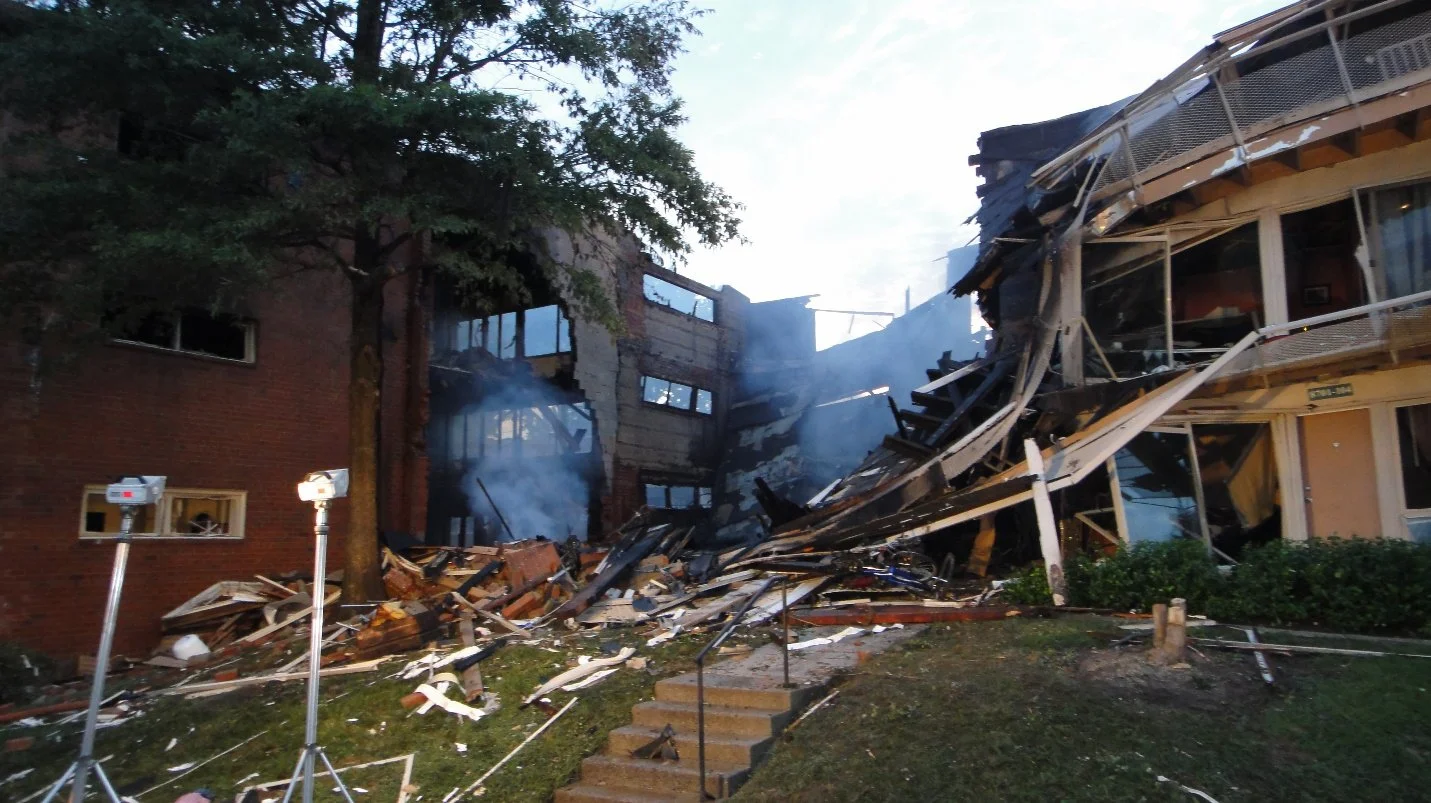
Incident Overview:
On August 10, 2016, at 11:51 p.m. EDT, a 14-unit apartment building, located at 8701 Arliss Street, in the community of Silver Spring, in Montgomery County, Maryland, partially collapsed due to a natural gas-fueled explosion and fire. The explosion and fire also heavily damaged an adjacent apartment building, 8703 Arliss Street, which shared a common wall with building 8701. As a result of this accident, 7 residents died, 65 residents were transported to the hospital, and 3 firefighters were treated and released from the hospital. The damage from the accident exceeded $1 million.
Key Findings (Non-Exhaustive) – Refer to Attached NTSB Report for Additional Findings:
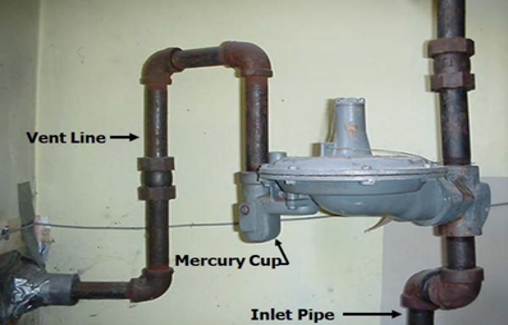
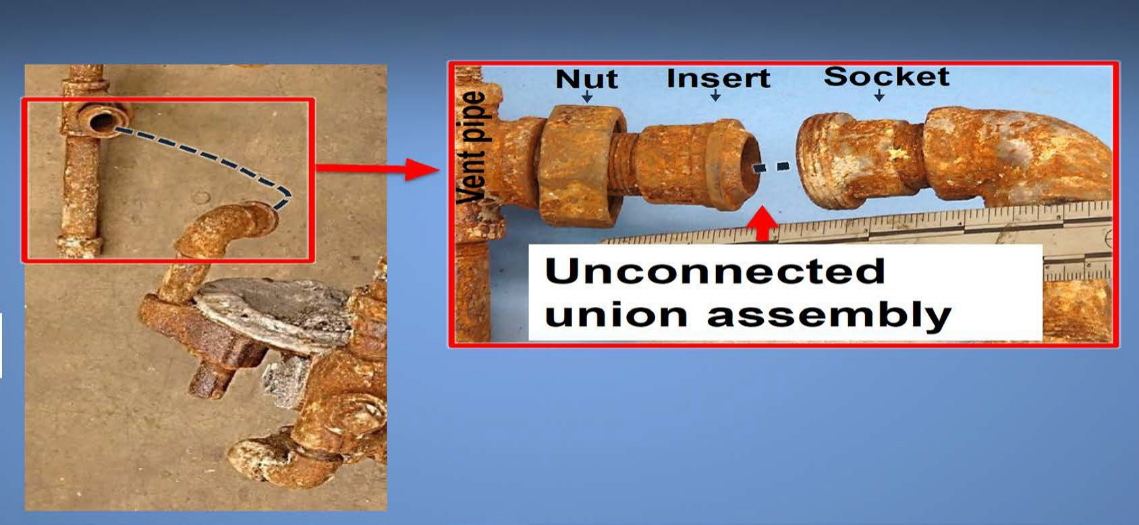
The National Transportation Safety Board determined that the probable cause of the explosion in building 8701 of the Flower Branch apartment complex was the failure of an indoor mercury service regulator with an unconnected vent line that allowed leaking natural gas from the mercury service regulator into the meter room where it accumulated and ignited from an unknown ignition source. Contributing to the accident was the location of the mercury service regulators (inside a locked meter room), where odor-based leak detection was not readily available.
Although the building management company as well as the local fire department had responded to multiple gas odors at the apartment complex between June 2015 and July 2016, Washington Gas Light (WGL) was not notified of the gas odor complaints. Had WGL been notified of the gas odor call on July 25, approximately 2 weeks prior to the incident, service technicians may have had the opportunity to enter the meter room of building 8701, identify the mercury regulator with the unconnected vent line, and remedy the situation, potentially preventing the gas release and explosion that occurred on August 10.
Additionally, in February 2016, the building management company changed the lock to the meter room but failed to place the new key in the lock box for use by maintenance staff, first responders, and/or WGL for entry. Therefore, on July 25, 2016, the responding fire department resources were unable to enter the meter room to investigate the source of the gas odor.
Had service regulators been located outside building 8701, the explosion would not have occurred because leaking gas from the failed mercury regulator would have vented to the atmosphere and dissipated.
In some circumstances, the use of gas odorants alone may not effectively mitigate the risk posed by gas accumulation inside structures caused by gas leaks, such as the leak at the Flower Branch apartment complex.
Had methane detectors been installed at the Flower Branch apartment complex, an alarm may have alerted residents or building management to the presence of a gas leak on either July 25, 2016, or August 10, 2016, reducing the potential for and consequences of a natural gas explosion.
The NTSB recommended that WGL revise its procedures and field forms to require technicians to verify the integrity of vent lines following the testing of indoor service regulators throughout the WGL network.
Key Lessons Learned (Non-Exhaustive):
The failure of a service regulator located inside a building or other structures, combined with an unconnected vent line, poses a significant threat to people and property with little warning.
Without a requirement that technicians verify the connection of vent lines when performing work on or near indoor service regulators, vent lines could inadvertently be left open after service work.
Additionally, the practice of performing the full required testing of the regulator vent line during service work for single-family residences and not for multi-family residences or apartments, as is required by procedure, is both a compliance and pipeline safety issue.
Although a gas odor was reported on July 25th and investigated by building management and the local fire department, no calls were placed to WGL, preventing the company from investigating the odor complaint as well. This indicates a need for further review and improvement to Public Awareness/ Stakeholder Engagement Programs.
Key Considerations (Non-Exhaustive):
Review the effectiveness of your Public Awareness/Stakeholder Engagement Programs in prompting immediate notification to the gas utility and 911 for any suspected gas odor. This review should ensure that procedures are in place with local 911 Dispatch Centers to also notify the local gas utility when they receive gas odor or other gas emergency calls. Particular emphasis on multi-use and large residential buildings/apartments may be warranted to emphasize that everyone and anyone should make the call and not assume someone else will.
Consider adding service pressure regulators to the DIM Program, including a risk-based programmatic approach to identifying the locations and conditions of all service regulators, with particular emphasis on inside mercury regulators. and replace/remediate based on findings.
Consider establishing a time frame with specific dates and milestones for replacing mercury service regulators.
Install all new service pressure regulators and relocate existing interior service regulators outside occupied structures whenever the gas service line, meter, or regulator is newly installed, replaced or is found to need maintenance.
Ensure that current procedures require technicians to verify the integrity of vent lines during the inspection and testing of indoor service regulators for all indoor service regulators, regardless of building type (single-family vs multi-family), and to document this upon job completion.
Consider advocating for or otherwise supporting the use of residential methane detectors, with particular emphasis on their use in areas not readily accessible, such as meter and utility rooms in large residential or commercial buildings.
Mercury Regulator Identification Guidance:
ALL Gas Service Regular Vent Piping MUST Be Properly Connected and Vented Outside the Building.
Disconnected vent piping inside is a potentially dangerous condition. If gas were discharged during a regulator malfunction, it could accumulate to explosive levels inside the building.
A missing or capped vent terminus could block the safe flow of gas away from the building resulting in a potentially 2dangerous condition.
Medium or severe corrosion at the regulator inlet piping, outlet piping, vent piping or regulator body is indicative of a potential safety issue.
Make repairs if qualified or notify Utility immediately if Vent Piping is disconnected, damaged, missing parts, or corroded.
Review NTSB’s Investigation here: https://www.ntsb.gov/investigations/Pages/DCA16FP003.aspx
NGA publishes Industry Remembrance Events in the spirit of continuous improvement. Findings and conclusions are extracted from publicly available reports and may not reflect those of all stakeholders.