
Enbridge Inc/Enbridge Gas Utah in South Jordan
Utah, November 6, 2024
Incident Overview:
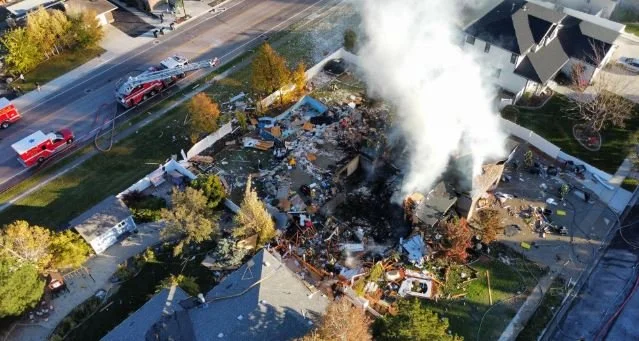
On November 6, 2024, a natural gas–fueled explosion killed one person and destroyed a home in South Jordan, Utah. The explosion damaged several nearby residences, displaced several families, and caused estimated property damage exceeding $1 million.
At approximately 3:09 p.m., a 911 operator received the first of several calls reporting an explosion at 10593 S 3210 W (street). Conditions were clear and daylight, with a temperature of 41°F and no precipitation.
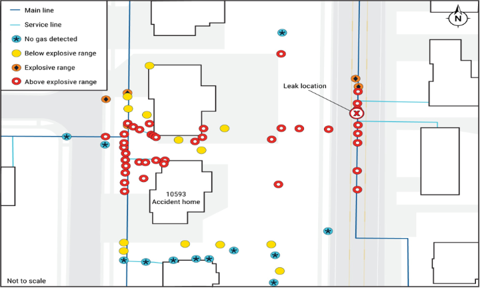
The South Jordan Fire Department arrived at approximately 3:15 p.m. Technicians from Enbridge Gas Utah, an Enbridge Inc. subsidiary and the home’s natural gas provider, arrived at approximately 3:45 p.m. and began investigating. They conducted bar hole testing around the scene and pressure testing of gas pipes serving the home and neighborhood. Testing continued for more than 21 hours before the leak was located. Enbridge isolated it at approximately 12:16 p.m. on November 7.
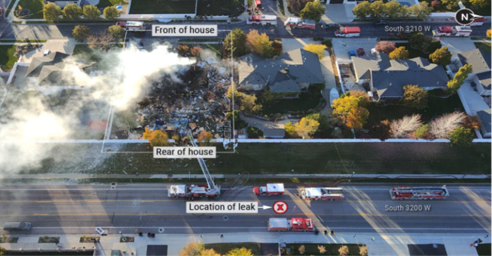
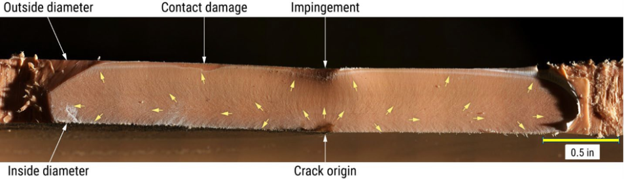
The National Transportation Safety Board determined that the explosion’s probable cause was a through-wall crack caused by rock impingement in a 4-inch-diameter Aldyl A polyethylene gas distribution main dating to 1976. Natural gas escaped, migrated about 150 feet, and accumulated in the home, where the furnace ignited it. Insufficient safeguards to mitigate the leak’s hazards contributed to the incident’s severity.
Key Findings (Non-Exhaustive) – Refer to Attached NTSB Report for Additional Findings:
In interviews with the Utah Deputy State Fire Marshal, residents described observations from the days before the explosion that, in hindsight, may have indicated diminished oxygen levels or natural gas in the home:
Some family members experienced dizziness, flu-like symptoms, and headaches.
On November 3, the basement water heater was not working properly.
On November 5, residents tried to troubleshoot the water heater but could not relight its pilot light.
On the evening of November 5, a resident lit a candle, noticed an unusually high flame, and quickly extinguished it.
No gas odors were reported to the utility or 911, and the home had no residential methane detectors.
The leak’s exact timing could not be established. However, residents’ symptoms, difficulty relighting the basement water heater, and observation of an unusually high candle flame suggest that natural gas may have been present in the home for at least 3 days before the explosion.
The leak originated approximately 150 feet from the destroyed home in a 4-inch-diameter Aldyl-A gas main manufactured and installed in 1976. The main operated at 45 psig, with an MAOP of 60 psig. Gas migrated more than 250 feet underground, and Enbridge technicians also obtained atmospheric readings in the adjacent home.
Post-incident testing by the NTSB Materials Laboratory found crack growth along the Aldyl A main’s inner surface originating from a single point of impingement on the pipe’s outer surface. The cracking extended up to 3.5 inches along the pipe and likely breached its outer surface abruptly.
Key Lessons Learned (Non-Exhaustive):
Despite widespread gas migration that may have continued for several days and reached multiple homes, neither Enbridge nor 911 received odor complaints. This illustrates the potential for soil to strip odorant from migrating gas and the need for additional safeguards.
The main was last surveyed in April 2022, in compliance with regulations and company procedures. This highlights the practical limits of leak surveys when pipeline failure occurs abruptly.
Natural gas alarms in the affected homes would likely have alerted residents to a potential problem and prompted evacuation and calls to 911, reducing or preventing the explosion’s fatal consequences.
The time required to locate and isolate the leak exposed potential weaknesses in emergency response and make-safe activities, prolonging and increasing risks to nearby residents, first responders, and the public.
Key Considerations (Non-Exhaustive):
Consider reviewing how your company manages threats associated with vintage Aldyl A assets and addressing any gaps. Options may include more frequent leak surveys and accelerated repair or replacement.
Consider reviewing emergency response procedures and practices to address priorities beyond locating the leak, including additional evacuations and emergency shutdown of affected gas infrastructure. Consider extending leak surveys and investigations to blocks behind or adjacent to the affected structure.
Consider methods for identifying areas or ground and soil conditions that promote odorant stripping as leaking gas migrates underground and consider assessing the associated threats as part of DIMP.
Consider ways to ensure that customer safety education includes notifying the company or 911 if residents are experiencing medical symptoms, appliance malfunctions, or other concerns that could be indicative of carbon monoxide presence, low oxygen levels or the presence of natural gas.
Consider ways to encourage or support residential methane detector installation.
Review NTSB’s Investigation here: https://www.ntsb.gov/investigations/Pages/PLD25FR001.aspx
NGA publishes Industry Remembrance Events in the spirit of continuous improvement. Findings and conclusions are extracted from publicly available reports and may not reflect those of all stakeholders.